Smart Factory Manufacturing
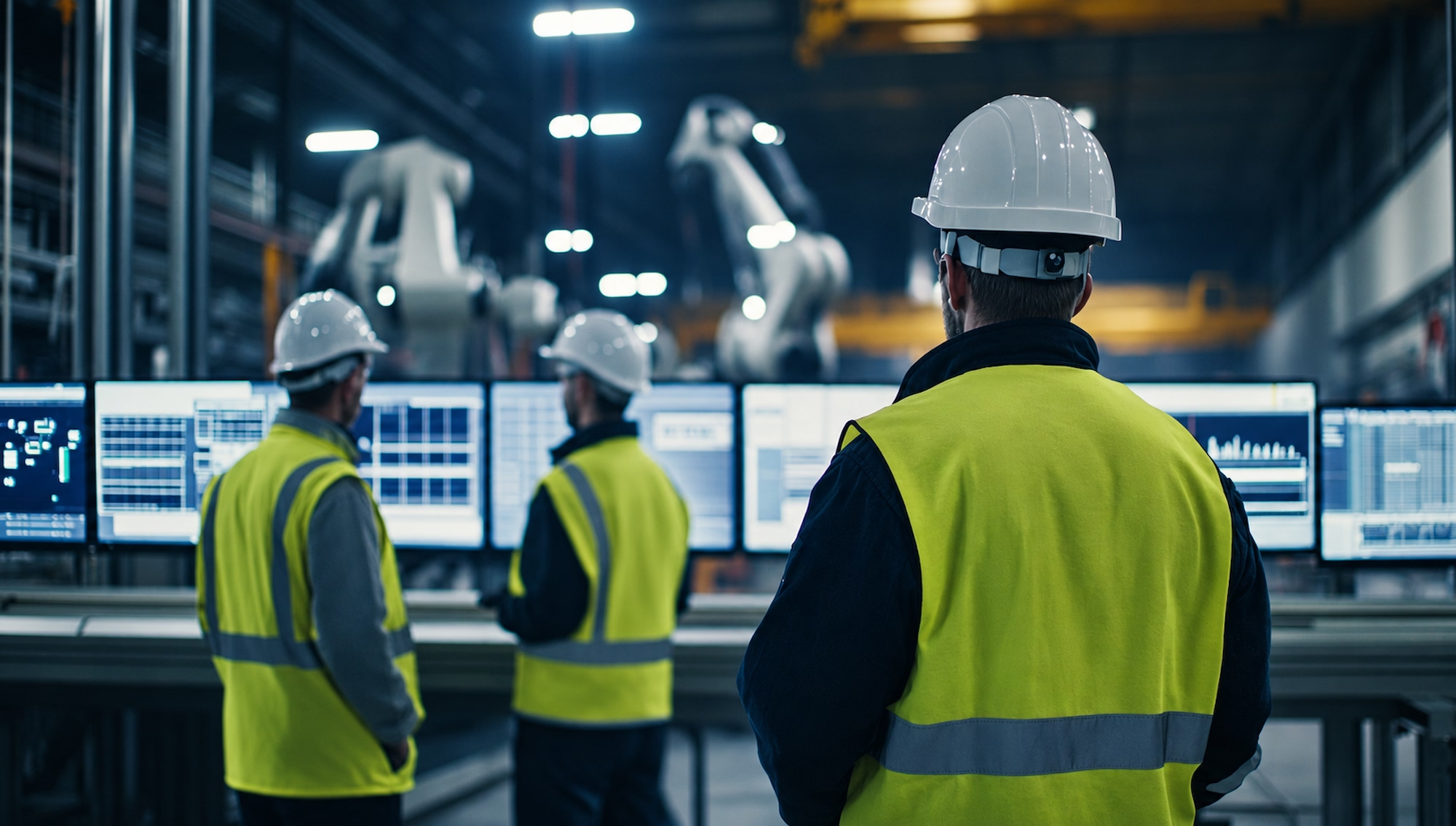
A connected factory can generate vast amounts of data and still leave teams short of context.
Digital manufacturing and smart factories generate vast amounts of data. The challenge is turning that data into the context needed to make better, faster decisions.
A machine slows slightly. Product quality begins to drift. Operators adjust settings to keep the line moving. Understanding how these changes relate to each other is what allows manufacturers to act before performance is lost.
Whether you are managing a high-speed production line or coordinating several manufacturing sites, performance depends on making the right decision at the right time. Smart factory manufacturing connects equipment, operational data and engineering models to help teams understand what is happening and where an intervention will make a difference.
At PurpleSector, we apply F1™-derived tools, technologies and culture through Industrial Racecraft™. We help manufacturers recognise changes in process behaviour, investigate the causes and evaluate improvements in the context of the complete operation.
PurpleSector helps smart factory manufacturing accelerate
A smart factory uses connected equipment and digital systems to monitor production, share information and support improvements. Smart manufacturing is the wider approach to using that information across engineering, production and the supply chain.
Our approach to smart factory and smart manufacturing projects starts with the outcome you need to achieve. That might be reducing unplanned downtime, improving product consistency or understanding the constraint limiting throughput.
In F1™, performance depends on understanding the interaction between the car, its operating conditions and the decisions made around it. The same system-wide thinking applies to manufacturing. Improving one machine may simply move a bottleneck further down the line.
Our vision, acoustic, thermal, vibration and volatile organic compound (VOC) sensors help capture signals that conventional monitoring can miss. CortexOne brings these signals together with existing operational data, helping teams investigate how and why process behaviour is changing.
We call this extreme observability. For digital manufacturing and smart factories, it provides a deeper view of equipment and process behaviour, helping teams distinguish meaningful signals from background noise.

Smart manufacturing and the smart factory
An alert is useful when it helps someone decide what to do next. A rise in vibration, for example, needs to be understood alongside machine load, production rate, recent maintenance and the consequences of stopping the line.
CortexOne connects sensor measurements with existing operational data to help teams understand those relationships. In smart factory manufacturing, this supports decisions based on the conditions across the process, rather than an isolated reading.
Predictive maintenance uses evidence of changing equipment behaviour to help teams prioritise investigation and plan interventions. It can provide earlier warning of deterioration; the maintenance itself still requires the right people, resources and timing.
Digital manufacturing and smart factories also support faster product and process development. Modelling and simulation help teams compare designs, focus physical testing and assess whether an improvement will deliver reliably in production. As in F1™, predicted performance needs to be checked against measured results.
Supporting smart factory and smart manufacturing decisions
PurpleSector’s approach to Decision Intelligence brings operational insight, modelling and simulation together to help teams assess possible responses. What happens if production speed increases? Would a different maintenance window reduce disruption? How will a change affect the rest of the line?
AI can support pattern recognition and analysis where it is useful, with engineering knowledge and operator experience providing essential context. Automation can then be applied to suitable tasks, with defined operating limits and clear responsibility for decisions.
Key technologies for smart factory manufacturing
Digital manufacturing and smart factories draw on several complementary technologies. These six areas can support better visibility and operational performance; the right combination depends on your production requirements and the systems already in place.
..................................
The Industrial Internet of Things
The Industrial Internet of Things (IIoT) connects physical equipment and sensors so they can collect and share operational data. Measurements such as temperature, vibration and cycle time help teams monitor behaviour and identify changes that warrant investigation.
In smart factory manufacturing, selecting the right measurements matters as much as connecting the equipment. Relating those measurements to process conditions makes the information useful for maintenance, quality and production decisions.
......................
IT and OT integration
Information technology (IT) supports business systems and information management. Operational technology (OT) monitors and controls physical equipment. Connecting them helps production, maintenance and planning teams work from a more consistent view of the operation.
For digital manufacturing and smart factories, this means equipment behaviour can be considered alongside production schedules and maintenance records. Teams can assess the impact of a developing issue and choose when to intervene.
...............
Data analytics
Data analytics turns measurements from digital manufacturing and smart factories into insight about equipment and production performance. It can support predictive maintenance, quality investigations and analysis of the factors affecting output.
Context matters. A change in temperature may be expected for one product and significant for another. Combining measurements with information about materials, settings and operating conditions helps teams distinguish normal variation from a meaningful change.
........................
Automation and robotics
Automation and robotics can improve the consistency of repetitive tasks, support inspection and move materials through the facility. In a smart factory and smart manufacturing programme, their contribution depends on how well they fit the wider production system.
Automating one stage may increase its capacity while leaving the overall constraint unchanged. Modelling production flow helps teams evaluate where automation is likely to improve performance and what it means for adjacent processes and operators.
.........................
Cloud and edge computing
Cloud computing can support shared data storage, analysis and visibility across digital manufacturing and smart factories. Edge computing processes information closer to the equipment, which can be useful when decisions require a rapid local response.
The architecture should reflect the application. Teams need to consider response times, connectivity and how information will be accessed and used across the operation.
..............
Digital twins
A digital twin connects a virtual representation of an asset or process with data from its physical counterpart. This helps teams compare expected behaviour with measured performance and explore how the system could respond to different conditions.
In smart factory manufacturing, a twin might help assess production schedules, investigate process settings or compare equipment layouts. Its usefulness depends on relevant data and a model validated against the operation it represents.
Testing options virtually provides a clearer basis for implementation. Automated adjustments require a defined connection to the control system and appropriate operating limits; they are not an inherent feature of every digital twin.
Improving smart factory manufacturing facilities
Connected smart factory manufacturing facilities can provide visibility across production, maintenance and business operations. The next step is using that information to answer a specific question. Where is availability being lost? What drives recurring defects? Which constraint is preventing the line from meeting demand?
PurpleSector helps teams connect the measurements, models and operational knowledge needed to investigate those questions. The aim is to recognise changing behaviour earlier, evaluate possible responses and focus effort where it can improve performance.
Progress can be measured through outcomes such as fewer unplanned stops, more consistent quality and improved overall equipment effectiveness (OEE). Energy consumption and waste can also be assessed alongside production performance, so improvements are judged against the outcome they need to deliver.
Industrial Racecraft™ brings the discipline of F1™ into these decisions: understand the system, test the assumptions and use measured performance to guide the next change.
To explore how PurpleSector could support your smart factory and smart manufacturing ambitions, get in touch with the team.
FAQ’s
A smart factory connects machinery, sensors and digital systems to give teams greater visibility of production. Smart manufacturing is the wider approach to using that information to improve performance across engineering, production and the supply chain.
Together, a smart factory and smart manufacturing approach help teams understand changing conditions and make better, faster decisions.
Six technologies commonly associated with digital manufacturing and smart factories are:
- The Industrial Internet of Things (IIoT)
- IT and OT integration
- Data analytics
- Automation and robotics
- Cloud computing
- Digital twins
Each supports a different aspect of the operation, from collecting equipment data to testing proposed changes virtually. The right combination depends on the manufacturing challenge being addressed.
The goal of smart factory manufacturing is to improve production performance by giving teams the information they need to act effectively. This can mean reducing unplanned downtime, improving product consistency or identifying the bottleneck limiting output.
At PurpleSector, we focus on connecting data with operational context, so teams can understand what is affecting performance and decide where to intervene.
Smart manufacturing connects physical equipment with digital systems to collect, analyse and use operational data. Measurements from sensors and existing production systems help teams recognise changes in behaviour and investigate their significance.
Analytics can support predictive maintenance and quality investigations, while simulation and digital twins help teams evaluate proposed changes before implementation. PurpleSector brings F1™-derived tools, technologies and culture to this process through Industrial Racecraft™, helping manufacturers turn insight into action.


Get in touch