Predictive Maintenance Tools & Technologies
A machine rarely fails without warning.
Long before a production line stops, its behaviour begins to change. A vibration becomes more pronounced. A component starts running hotter. The sound of a process shifts slightly. Individually, these changes can be easy to overlook - particularly while the equipment continues to operate and production targets are still being met.
The purpose of predictive maintenance is to recognise these weak signals, understand what they mean and give teams time to act before performance is affected.
Predictive Maintenance in Manufacturing
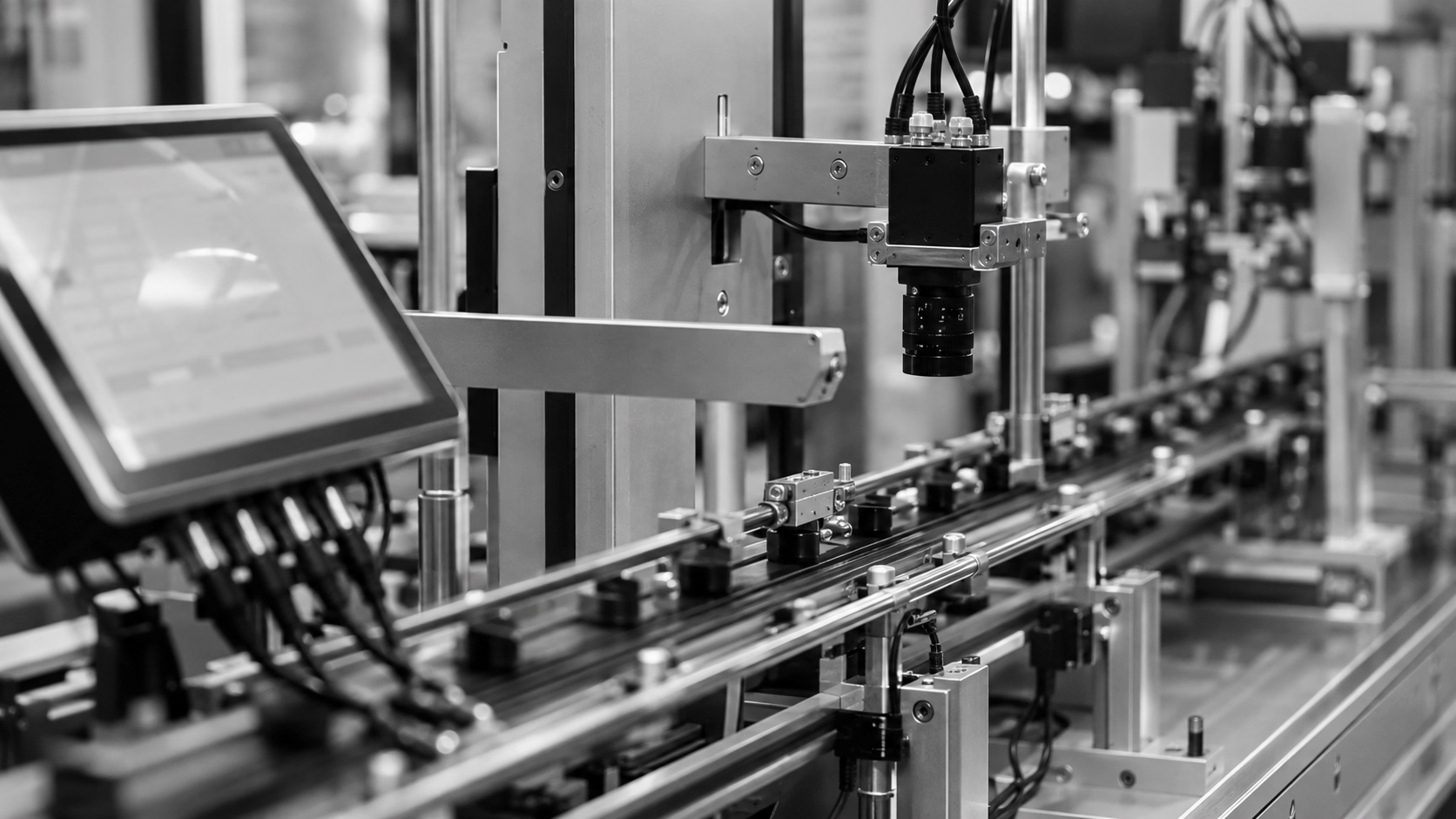
Predictive maintenance in manufacturing uses real-time data, [sensor] technology and condition monitoring to identify changes in equipment performance before they result in failure.
Traditional maintenance is often driven by one of two events: a scheduled service interval or a breakdown. The first can lead to parts being inspected or replaced before it is necessary; the second means the opportunity to intervene has already passed.
Predictive maintenance technologies create a third option. By continuously monitoring how equipment behaves, manufacturers can plan interventions around its actual condition rather than relying solely on fixed schedules or reacting after production has stopped.
However, collecting more data is not enough. Most manufacturing environments already generate enormous amounts of information. The challenge is turning that information into context: connecting changes across equipment and processes, distinguishing meaningful signals from background noise and putting the right insight into the right hands.
At PurpleSector, we call this extreme observability.
It means looking beyond whether equipment is simply running or stopped to understand how it is behaving between those two states. By making subtle changes visible sooner, teams can identify emerging issues, prioritise maintenance and intervene before process degradation becomes production disruption.
PurpleSector’s Predictive Maintenance Tools
Our suite of proprietary [sensors] and predictive maintenance tools draws on knowledge developed within the high-speed, data-rich environment of F1™.
An F1™ car can use hundreds of sensors and generate vast amounts of data over a race weekend. Teams do not wait for a component to fail before investigating its performance. They continuously study how the complete system behaves as conditions change, looking for the small deviations that could indicate deterioration or lost performance.
We bring the same principle into manufacturing.
Our sensors are designed to fill critical gaps in existing data by capturing changes that human senses cannot detect. Smart and non-invasive, they gather information from across manufacturing processes without disrupting production.
But individual signals only tell part of the story.
We created CortexOne which acts as the central brain of the system; bringing together data from our sensor suite with information manufacturers already hold, and connecting different sources to provide the context behind each change.
A shift in vibration may mean very little in isolation. Combined with a change in sound, temperature, air quality or machine-vision data, it can reveal a developing pattern. CortexOne allows these relationships to be recognised, validated and turned into digitally observed insights that teams can act upon.
Rather than presenting people with another dashboard full of disconnected information, the system surfaces what matters. This gives the people closest to the process greater visibility across the [smart factory], supporting faster root-cause identification, better decisions and earlier intervention.
Sensors for Predictive Maintenance in Manufacturing
Equipment does not always communicate a developing problem in the same way. Some changes can be seen, while others first appear through vibration, sound, temperature, air quality or emissions.
Our F1™-derived [sensors] use predictive maintenance data analytics to capture these different signals:
Barnowl™
Provides continuous machine vision and can track high-speed objects beyond the capability of the human eye.
Bloodhound™
Monitors the air to identify and quantify volatile organic compounds within a sample.
Honeybee™
Detects fine vibrations, movement and rotation across three axes, alongside magnetic orientation and temperature.
Springbok™
Listens to and measures sound beyond the capability of the human ear.
Viper™
Uses multispectral imaging to make heat, fluorescence and other non-visible emissions from manufacturing processes visible.
Each sensor provides a different view of the process. CortexOne connects those views, combining them with existing manufacturing data to build a more complete understanding of what is happening and why.
This is what turns monitoring into extreme observability. Instead of simply alerting teams that a threshold has been crossed, it helps them recognise developing patterns, understand the surrounding conditions and make informed decisions before those changes become failures.
By identifying emerging issues earlier, PurpleSector can help manufacturers prioritise interventions, optimise maintenance schedules and improve performance across their [smart factory] and wider manufacturing operations.
To find out how predictive maintenance technologies could improve the visibility and performance of your production processes, [contact] the PurpleSector team.

Get in touch