Digital Twin Automotive Engineering
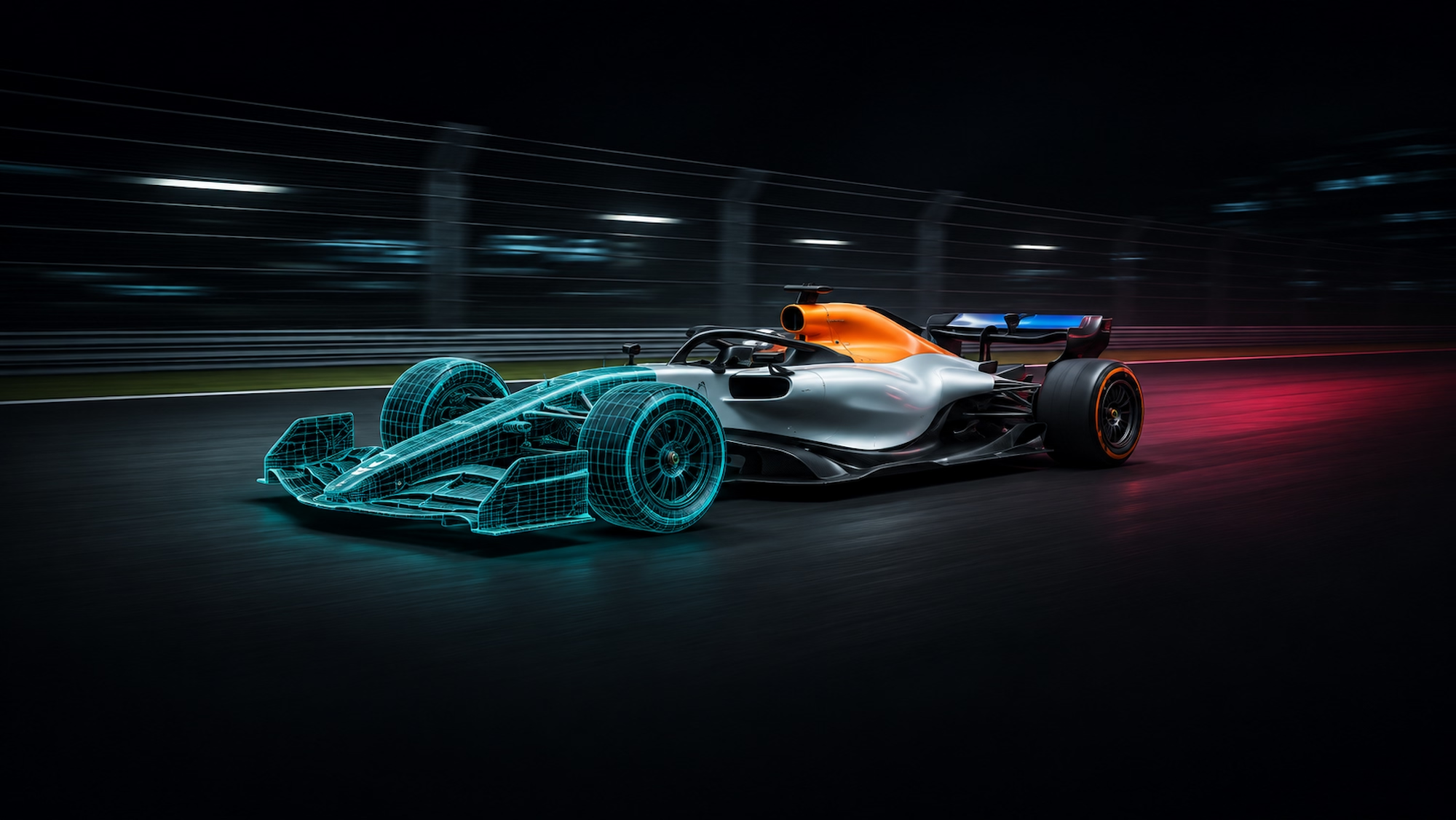
In automotive engineering, the ability to test changes virtually is only part of the advantage; understanding their consequences before they reach the production line is where digital twins deliver real value.
In F1™, teams have very limited opportunities to test their cars physically before the season begins. In 2026, teams had just nine days of pre-season track testing to prepare for the first race, despite developing new cars under a major change in technical regulations.
So how do engineers develop, test and refine such complex systems with so little time on track?
Much of the engineering happens before the car ever reaches the circuit. Simulation, computational fluid dynamics (CFD), driver simulators and physical test rigs allow teams to evaluate thousands of design options, with track testing used to validate what the models have already predicted.
This digital-first approach is equally relevant to automotive manufacturing, where development time, production efficiency and the cost of physical testing all influence engineering decisions. Digital twin technology in the automotive industry allows manufacturers to investigate system behaviour, test different configurations and identify potential problems before implementing changes in the real world.
The advantage is not simply being able to simulate a product or production line; it is using that simulation to make better engineering decisions, faster.
Digital Twins for Automotive Manufacturers
Digital twin systems in engineering create digital representations of physical assets, including products, machinery and manufacturing processes. Using a digital twin for automotive manufacturing allows engineers to test new products, run hypothetical scenarios and evaluate changes without the immediate risk of costly downtime or damage to equipment.
PurpleSector's approach to digital twin technology in the automotive industry draws on the engineering methods used in F1™, where virtual development and physical testing work together to accelerate the design process.
In motorsport, engineers use CFD to evaluate aerodynamic performance, driver simulators to investigate vehicle behaviour and physical rigs to validate specific components and systems. Meanwhile, aerodynamic, chassis and power unit development can progress in parallel, allowing teams to investigate multiple engineering challenges simultaneously.
The same principles can be applied to automotive production. A manufacturer preparing to introduce a new assembly process, for example, can use simulation to evaluate different layouts, production sequences and operating conditions before committing to physical changes.
However, a digital model is only useful if it accurately represents the behaviour of the system being modelled. Machinery wears, materials vary and operating conditions change; digital twins in automotive manufacturing need to account for these factors rather than simply recreating an idealised production environment.
Understanding the Relationship Between Digital and Physical Systems
One of the most important aspects of digital twin systems engineering is the relationship between simulation and reality.
In F1™, physical testing is rationed by the regulations, so engineers rely heavily on simulation to develop and refine their cars. Track time is then used to confirm whether the models accurately predicted real-world performance, with any differences feeding back into further development.
This continuous exchange between virtual models and physical evidence is central to PurpleSector's Industrial Racecraft™ approach, particularly the principle: continuous reconciliation with reality.
For automotive manufacturers, the same approach can improve how production processes are developed and optimised. Rather than relying entirely on physical trials, engineers can use digital twins to test assumptions, investigate potential problems and evaluate changes before implementing them on the factory floor.
Consider a production line that performs consistently during commissioning but begins experiencing increased quality variation as production volumes rise. A simulation based purely on the original design might not explain the change; however, a digital twin informed by actual operating data can help engineers investigate the relationships between equipment loading, material properties, temperature and process performance.
The objective is not simply to reproduce what the system was designed to do, but to understand how it behaves under real operating conditions.
Digital Twin Technology in Automotive Manufacturing
Digital twin technology in the automotive industry can support several stages of manufacturing, from production planning and commissioning through to ongoing process optimisation and predictive maintenance.
Using a digital twin for automotive manufacturing, engineers can test alternative production configurations, assess the impact of equipment changes and identify potential inefficiencies before disrupting live operations.
However, collecting more data does not automatically produce a more accurate digital twin. The quality and relevance of the information matter far more than the volume being collected.
At PurpleSector, our suite of proprietary sensor tools draws on experience in F1™, where hundreds of sensors capture detailed information about vehicle behaviour and performance. These technologies allow us to capture digitally observed insights that conventional monitoring systems may overlook, improving understanding of physical processes and identifying non-normal operating conditions.
When combined with simulation and existing manufacturing data, these measurements can provide a more accurate picture of how equipment and processes behave, allowing engineers to refine their models and make more informed decisions.
This is where digital twins in automotive manufacturing become particularly valuable; not simply as virtual replicas, but as engineering tools that connect physical processes with digital analysis.
Digital Twins and Predictive Maintenance
Another important application of digital twin technology in the automotive industry is predictive maintenance.
Manufacturing equipment can remain operational while its performance gradually deteriorates. Changes in vibration, temperature, loading or cycle behaviour may indicate developing problems long before a machine fails or triggers an alarm.
By combining operational data with digital models, engineers can investigate these changes, identify patterns associated with deterioration and make more informed decisions about maintenance.
The same principle applies in F1™, where engineers study subtle changes in component behaviour rather than waiting for outright failure. Understanding how performance changes under different conditions allows teams to investigate potential issues before they become more serious.
For automotive manufacturers, this approach can reduce unplanned downtime, improve asset reliability and support more effective maintenance planning.
Digital Twins in Electric Vehicle Manufacturing
The growing complexity of electric vehicles creates further opportunities for digital twin systems engineering, particularly where battery systems, thermal management, electric drivetrains and vehicle control systems interact.
Changes in one part of a vehicle can influence performance elsewhere, making it important to understand how different systems behave together rather than evaluating components independently.
Using a digital twin for automotive manufacturing, engineers can simulate these interactions, investigate different operating conditions and test potential design or process changes before implementing them physically.
Digital twins can also support the optimisation of electric vehicle production lines, helping manufacturers evaluate equipment utilisation, manufacturing quality and potential maintenance issues without relying entirely on physical testing.
From Virtual Testing to Better Engineering Decisions
For automotive manufacturers, the value of digital twins extends beyond reducing the need for physical prototypes. The real opportunity lies in connecting simulation, operational data and engineering expertise to improve understanding of complex systems.
Through Industrial Racecraft™, PurpleSector applies F1™ derived engineering methods to industrial challenges, combining digital-first development, parallel execution and continuous validation against real-world performance.
The objective is not simply to create a digital representation of a manufacturing process; it is to use simulation and physical evidence to accelerate development, reduce risk and make better engineering decisions before changes reach the production line.
To explore how digital twin technology in the automotive industry could improve manufacturing processes, accelerate development and optimise operational performance, get in touch with the PurpleSector team.
FAQ’s
Digital twin systems in engineering use simulation software, sensor data and other operational information to create digital representations of physical products, machinery or manufacturing processes. These models allow engineers to analyse system behaviour, evaluate changes and investigate different operating scenarios.
A virtual twin is generally used to simulate a product, system or process, often before a physical version exists. A digital twin maintains a connection with information from its physical counterpart, allowing the model to be updated or assessed using real operating data.
Digital twin systems engineering enables engineers to test designs, investigate performance and assess potential changes in a virtual environment. It can reduce reliance on physical testing, support predictive maintenance and improve understanding of complex systems.
Digital twin technology in the automotive industry is used to simulate production lines, test product designs, optimise manufacturing processes and monitor equipment performance. A digital twin for automotive manufacturing can also support predictive maintenance and the evaluation of different operating scenarios.
Digital twins support electric vehicle development and manufacturing by enabling engineers to evaluate battery systems, thermal management, drivetrain performance and production processes. They can also be used to optimise manufacturing facilities and investigate potential issues before changes are implemented physically.
Get in touch