Asset Management in Manufacturing
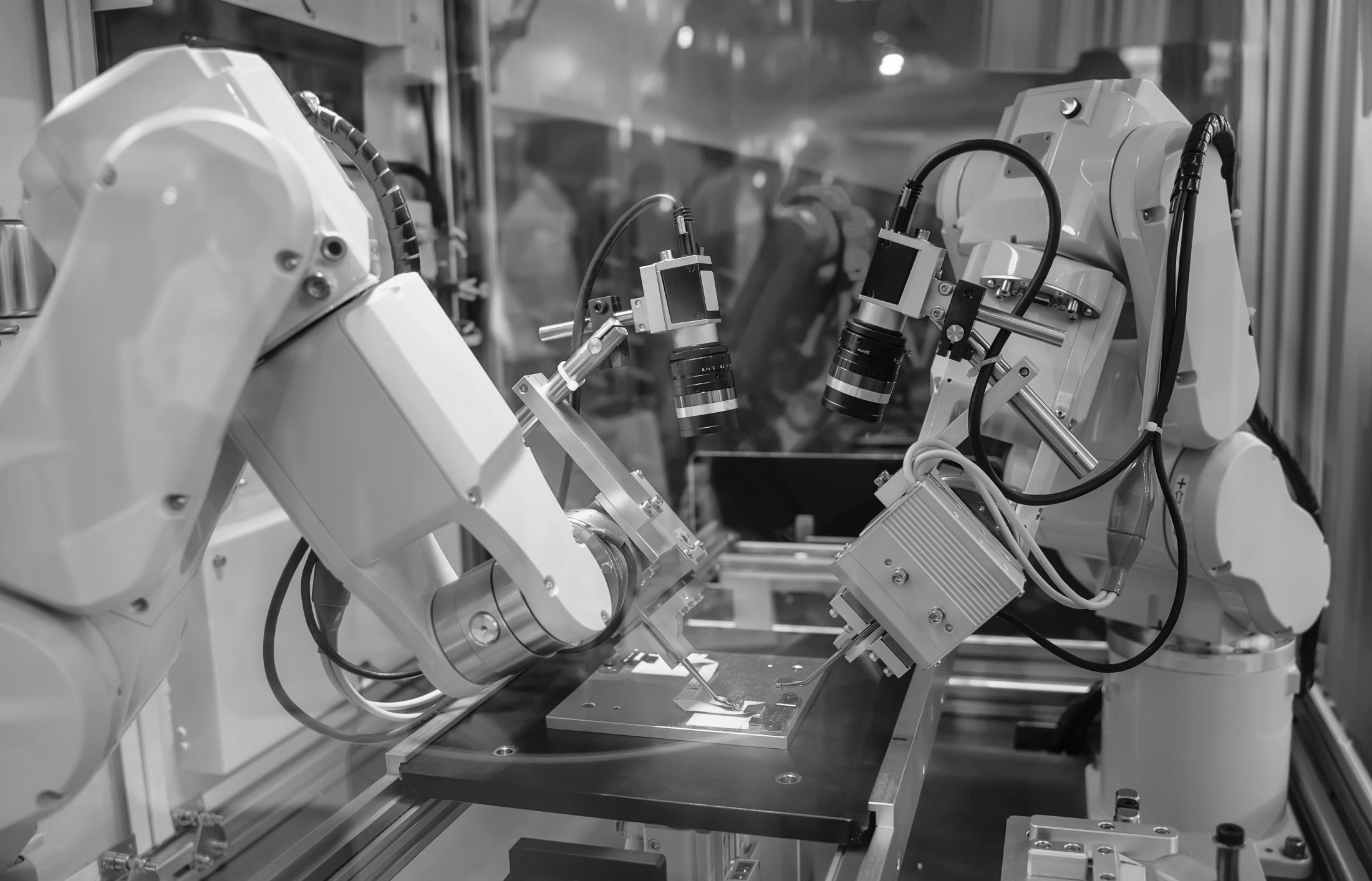
Three asset management mistakes manufacturing organisations still make despite digital transformation, AI and smart factories.
Issue 1: Most businesses only digitise what is easy to get hold of.
Walk into most factories and the majority of the data being collected comes from sensors that were already fitted by the equipment OEMs, for their purposes, not yours. Those sensors were never put there to help engineers understand the process. They exist to keep the equipment running and stop it damaging itself. So, what you get is a lot of binary information. Running or stopped. Fault or no fault. Part detected or not detected.
Then somebody sticks it all on a dashboard and you now believe you have digitally connected processes.
The problem is that this tells you very little about how the process is actually behaving. You know when something has stopped working, but you do not know why. You are measuring outcomes rather than understanding behaviour.
That is the bit that I think asset management in the manufacturing industry still misses.
Good engineering is not about collecting the easiest data available. It is about going deeper to find the data that explains variation, instability and changing process conditions before they become problems.
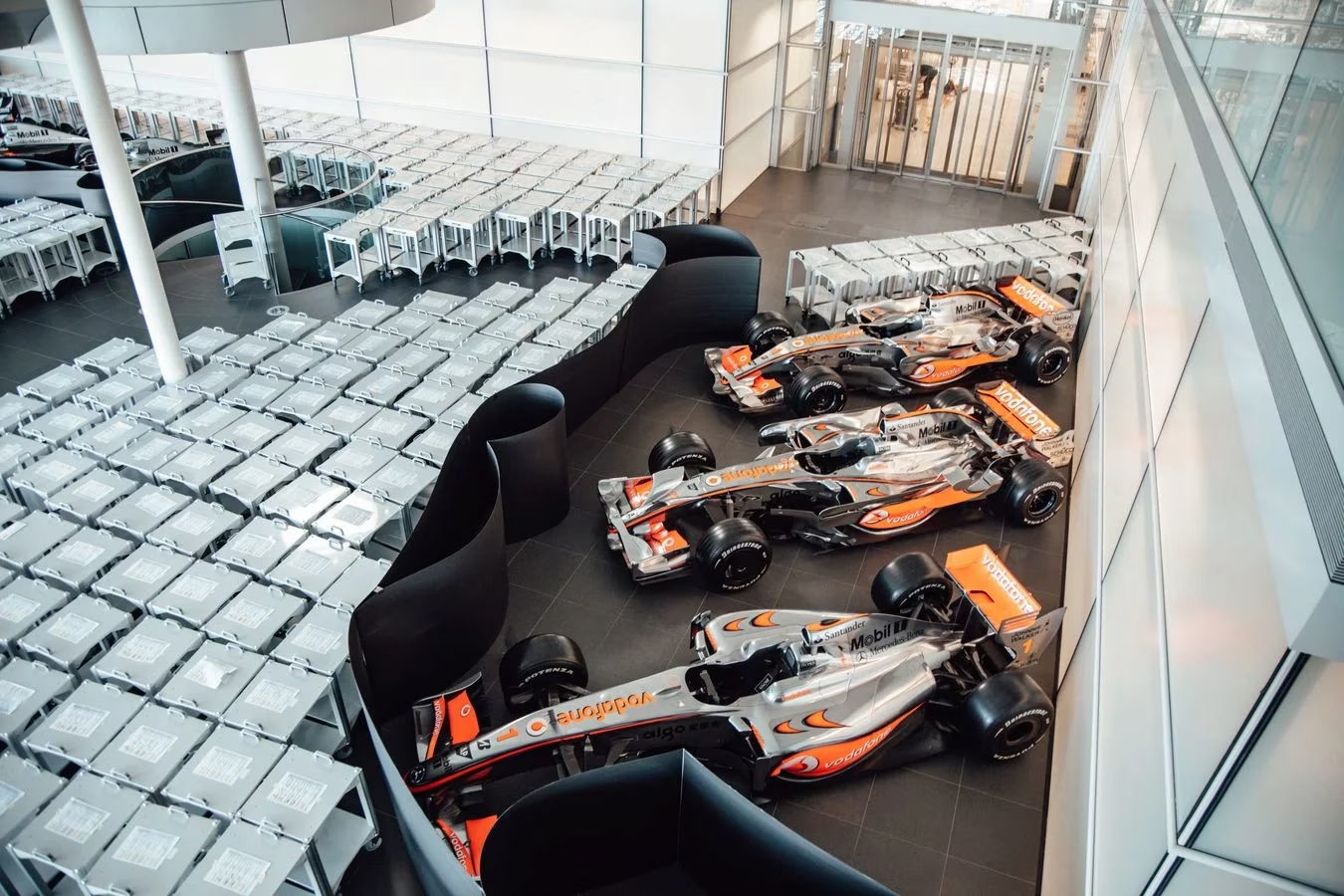
This is one of the reasons I find Formula 1™engineering so interesting. F1™ teams are not interested in whether something simply works or fails. They are interested in how the system behaves as conditions change. They look at tiny shifts in temperature, vibration, tyre performance, aero balance and driver behaviour because they know performance loss starts long before outright failure.
Asset management software for manufacturing should behave more like that, focusing on getting the right data not the easy data.
Issue 2: The manufacturing industry spends too much time investigating failures and not enough time studying the process before failure happens.
Most root cause analysis starts after the damage is already done. A line goes down, waste or scrap increases, a customer complains, or something falls outside tolerance. Then everybody jumps in to try and explain what happened.
But the interesting bit is usually much earlier.
Processes nearly always give off signals before they fail properly. The variation starts creeping in. Operators compensate for it. The machine sounds slightly different. Cycle times change. Temperatures move around more than usual. Quality still passes inspection, but only just.
In asset management in the manufacturing industry that grey area is where real engineering lives.
Too many businesses ignore those non-normal conditions because technically the process is still running. The KPI stays green, so nobody asks questions. But if you actually study the conditions properly, you learn far more about process capability than you do from a single catastrophic failure event.
This is also where operators become massively undervalued.
Good operators who use asset management software for manufacturing already know where the instability is. They can hear it, feel it and spot it long before the data systems do. They make constant adjustments and interventions to keep processes running, often without anybody formally recognising what they are actually compensating for.
The unfortunate thing is that these interventions often hide the true instability of the process. The line keeps running because experienced people are quietly correcting problems in real time. Everyone else assumes that the process is stable because production output still looks acceptable on paper.
But the operator knowledge itself is rarely captured properly. Their observations, instincts and hypotheses are not digitised, tested or turned into engineering understanding. That is a huge, missed opportunity.
If you can take what experienced operators already know, combine it with proper process data and turn those observations into something metricated, measurable and scientific, your level of process understanding improves dramatically. You stop relying on tribal knowledge and start building genuine control over the system.
Again, F1™ is very good at this. Driver feedback is treated as an engineering data point, and codification is applied to turn natural language into hard data. A good example is tyre degradation, a driver doesn't simply say "my tyres have gone off" they will state, "stage 3 blistering", this accuracy and standardisation allows teams correlate that feedback against telemetry and performance trends immediately. Human observation and technical data work together.
Asset management in manufacturing should do the same thing and at the same frequency.
Issue 3: Businesses still don’t think about asset management software for manufacturing as a connected system.
Most organisations operate in silos. Maintenance focuses on uptime. Quality focuses on defects. Production focuses on output. Supply chain focuses on cost and delivery. Everyone has their own targets and their own data.
But processes do not behave like that in the real world.
A material issue from a supplier might affect machining performance three days later. An environmental change might alter dimensional stability downstream. A maintenance adjustment on one machine can create variation further along the line. Everything interacts with everything else.
Yet very few businesses genuinely analyse those relationships properly.
People often look at one process in isolation without understanding the condition of supply entering it. That is one of the biggest gaps I see in asset management in manufacturing today. There is not enough focus on causality across the whole chain.
This is another area where F1™ gets it right. Every team understands that the car behaves as a complete system. Tyres affect aero. Aero affects balance. Balance affects tyre wear. Driver inputs affect thermal behaviour. Nothing exists in isolation.
For me, bringing the best of F1™ into asset management in the manufacturing industry is not about making factories look futuristic or covering the shopfloor in flashy technology. It is about applying proper engineering discipline to process understanding.
Faster feedback loops. Better understanding of variation. Better interpretation of data. More focus on causality instead of hindsight.
Less buzzword bingo. More engineering.
The businesses that will genuinely improve over the next decade will not necessarily be the ones with the biggest digital transformation budgets. They will be the ones that understand their processes properly, recognise weak signals early and make decisions based on engineering reality rather than management theatre.

Get in touch